Meds KLOW · Tissue and delivery
Getting KLOW peptide to the right place
A medicine has to reach the tissue it is meant to help. With KLOW, the experiments make that journey much more interesting than the ingredient list suggests.
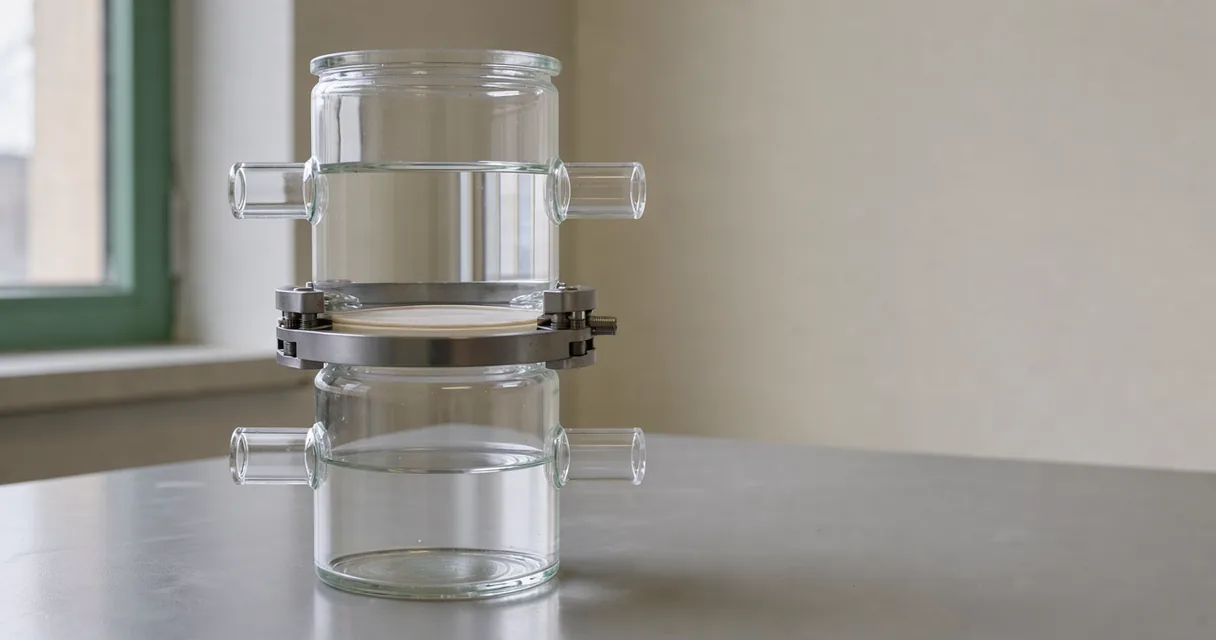
Local delivery of KPV
KPV, one ingredient in the KLOW peptide blend, was studied in a gel that clings to tissue. Zhou and colleagues reported anti-inflammatory, antibacterial and repair effects in laboratory and animal wound models. The preparation includes a way of holding the peptide near its application site. That practical problem draws me in: a candidate medicine has to reach the place where it might do useful work.
A different experiment applied a copper tripeptide to prepared human skin outside the body, then measured copper passing through and copper retained within the tissue. Some stayed in a dermal depot, a local store in the skin. Arrival and retention are physical questions that the ingredient name alone leaves unanswered.
KLOW peptide combines KPV, GHK-Cu, BPC-157 and TB-500. Each has a separate research history, and the whole mixture still lacks a controlled trial. I start a tendon, gut or hair-growth claim by asking how the tested substance reached that tissue.

What is KLOW peptide?
KLOW is a mixture of four distinct peptides, short chains of amino acids. They remain separate substances when combined. KPV is a short fragment of alpha-MSH, a hormone; GHK-Cu pairs a peptide with copper; BPC-157 is based on a sequence from a protein identified in gastric juice; and TB-500 is a short synthetic fragment of thymosin beta-4.
The proposed combination covers several repair processes. KPV reduced inflammatory signalling in intestinal and immune cells in laboratory tests. GHK-Cu supported collagen and other skin-matrix production in laboratory skin-cell studies. BPC-157 improved repair of cut Achilles tendons in rats. Wound and hair findings often cited alongside TB-500 tested the larger thymosin beta-4 protein.
Those are reasons to investigate a combination. The finished blend needs a comparison against its ingredients, smaller combinations or placebo before any extra benefit can be established. FDA has approved neither KLOW nor its four constituents for human use.
The listed 80 mg contents
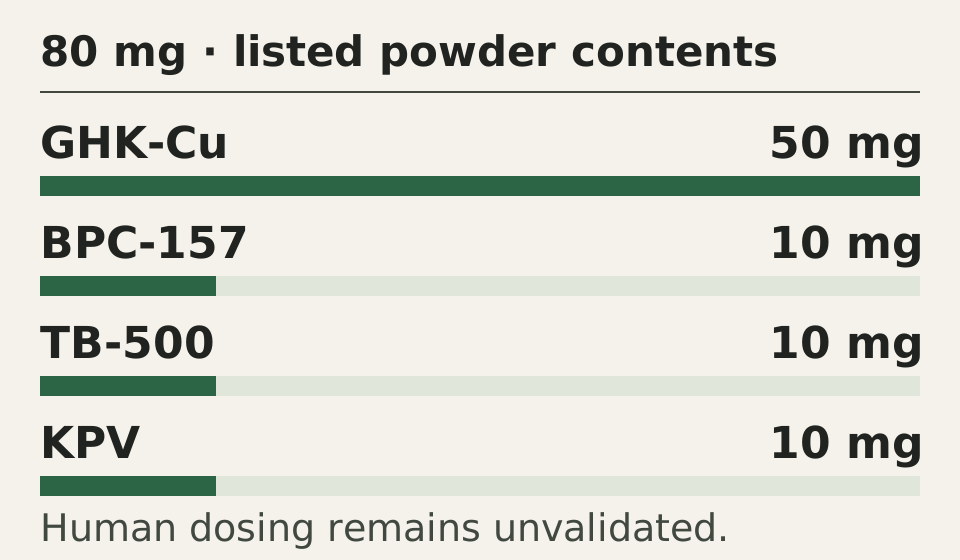
A commonly listed KLOW peptide 80 mg vial contains GHK-Cu 50 mg, BPC-157 10 mg, TB-500 10 mg and KPV 10 mg. The chart shows how much of each ingredient is listed in the container. A validated human dose has yet to be established.
GHK-Cu accounts for most of that powder, and its copper can give the liquid a blue tint. Colour alone cannot confirm the contents. The blend also has no single CAS number, the chemical identifier used for an individual substance.
KLOW peptide for hair growth
The hair literature rewards close attention to the actual material. Whole thymosin beta-4 stimulated hair growth in rats and mice. Related copper peptides affected hair follicles in C3H mice. In a different experiment, AHK-Cu lengthened human follicles outside the body; AHK-Cu is a relative of GHK-Cu.
The isolated human follicles deserve attention. Its setting still matters: the follicles were outside a person's scalp, and the compound was AHK-Cu. There is no trial establishing hair growth from the KLOW mixture. The measured-benefits page follows those distinctions further.
KLOW certificate of analysis
A careful certificate of analysis can address the question of a sample's contents. I distrust a jump from verified contents to a predicted recovery. My question about healing would still need a controlled human trial showing what the blend does. The same goes for a reassuring blue colour: the appearance cannot establish safety or benefit.
The research experiments concern delivery and biological effects. Reported changes and safety questions cover a different set of uncertainties, including unverified accounts from people who describe using the blend.
KLOW, klo and chlo
A near-matching spelling leaves room for confusion. Here, KLOW means the combination of KPV, GHK-Cu, BPC-157 and TB-500. That ingredient list matters when a search or label says “klo peptide” or “chlo peptide”, too.
The comparison with GLOW explains the extra KPV ingredient. The dosage discussion addresses why a powder weight cannot settle how much reaches a tissue.