Measured outcomes
Measured KLOW peptide benefits in skin and tissue
Collagen production, tendon strength and follicle growth are different endpoints. Here are the changes the studies actually counted or observed.
Collagen and visible skin changes
The 2015 GHK review reports increased collagen production in 70% of women treated with GHK-Cu cream, compared with 50% for vitamin C and 40% for retinoic acid. These percentages describe the women with an increase; they do not give the size of the collagen increase.
Other topical trials discussed in the review reported improvements in firmness, clarity, fine lines, wrinkle depth and skin density. This is the part of the record closest to a measured human benefit. I give it weight for topical skin questions while leaving systemic KLOW effects open.
The 2018 gene-data review examines changes in gene expression in laboratory and database work. Those measurements help build a biological explanation. Skin appearance, gene activity and a person's healing outcome each require their own measurement.
Rat tendons and wound coverage
BPC-157 improved biomechanical and functional recovery after a complete Achilles tendon cut in rats. That includes more than a change in a signalling molecule: the study assessed the repaired tissue and the animals' function. I prefer an outcome like tendon strength when the claim concerns tendon repair. The species and injury model still bound the result.
Full-length thymosin beta-4 increased new skin coverage in rat wounds by 42% at 4 days and by up to 61% at 7 days versus saline. The experiment also reported increased collagen deposition and blood-vessel formation. Those figures describe that wound model and that full protein. The short TB-500 fragment needs evidence for its own effects.
Hair follicles in animals and outside the body
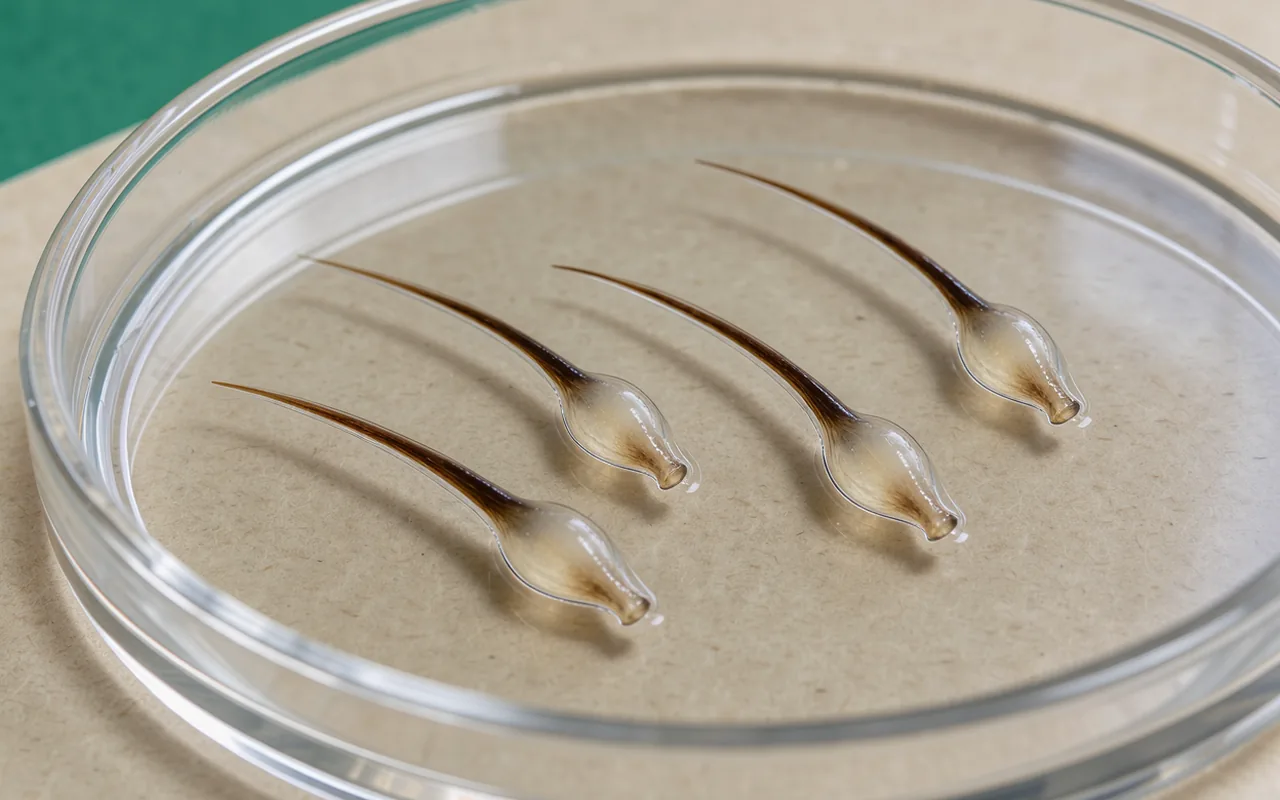
Thymosin beta-4 stimulated hair growth in rats and mice, with work on follicle stem-cell migration and differentiation. A later rodent follicle paper developed that account further. The copper-peptide report in C3H mice describes follicle activity; the limited mouse report leaves my confidence lower than the fuller mechanistic studies do.
The AHK-Cu experiment with human hair follicles measured follicle elongation outside the body and changes in cultured dermal papilla cells. AHK-Cu is a related copper peptide, distinct from GHK-Cu. Human tissue makes the experiment relevant to the question; it leaves delivery to a living scalp and the KLOW blend untested.
Gut inflammation experiments
KPV reduced inflammatory signalling in cultured cells and chemically induced colitis in mice. The gut result gives the KPV ingredient a specific research rationale. No controlled study establishes better digestion, tendon healing, skin appearance or hair growth from the complete KLOW mixture.
Any blend trial I take seriously would have to name its main endpoint in advance. A claim as broad as “repair” can hide considerable differences between what people hope for and what an experiment measured. Delivery details and community accounts fill in the rest of that picture.