Delivery experiments
Skin, gut and blood in KLOW peptide research
The delivery work is where these compounds become interesting to me: skin holding copper, gut cells admitting KPV, and gels designed to hold a peptide in place.
Copper in prepared skin
The human skin-penetration experiment measured copper after a copper tripeptide was applied to skin outside the body. It described both passage through the prepared tissue and retention in a dermal depot. The dermal depot makes me ask where an absorbed ingredient actually ends up.
The GHK skin-regeneration review also discusses topical human studies and laboratory work on collagen and other supporting materials. A result from a cream has a specific site of application. Extending it to an injected four-peptide mixture requires new evidence about exposure and outcomes.
I would prioritise measured tissue exposure alongside clinical outcomes in a blend study. Otherwise, the ingredient list tells only the beginning of the story.
KPV uptake in intestinal cells
Dalmasso and colleagues studied KPV uptake through PepT1, a transporter that carries small peptides into cells. Their work used human intestinal and immune cells in culture, plus mice with chemically induced colitis. KPV reduced inflammatory signalling in the cell experiments; oral KPV reduced the severity of colitis in mice.
I rate that connection between cellular uptake and inflammatory signalling as a useful mechanistic finding. The peptide has a way into the studied cells. The human cells were growing in a laboratory, and the disease outcomes came from mice. A person's report of better digestion after KLOW sits much further along the chain of assumptions.
Gels that hold KPV near tissue
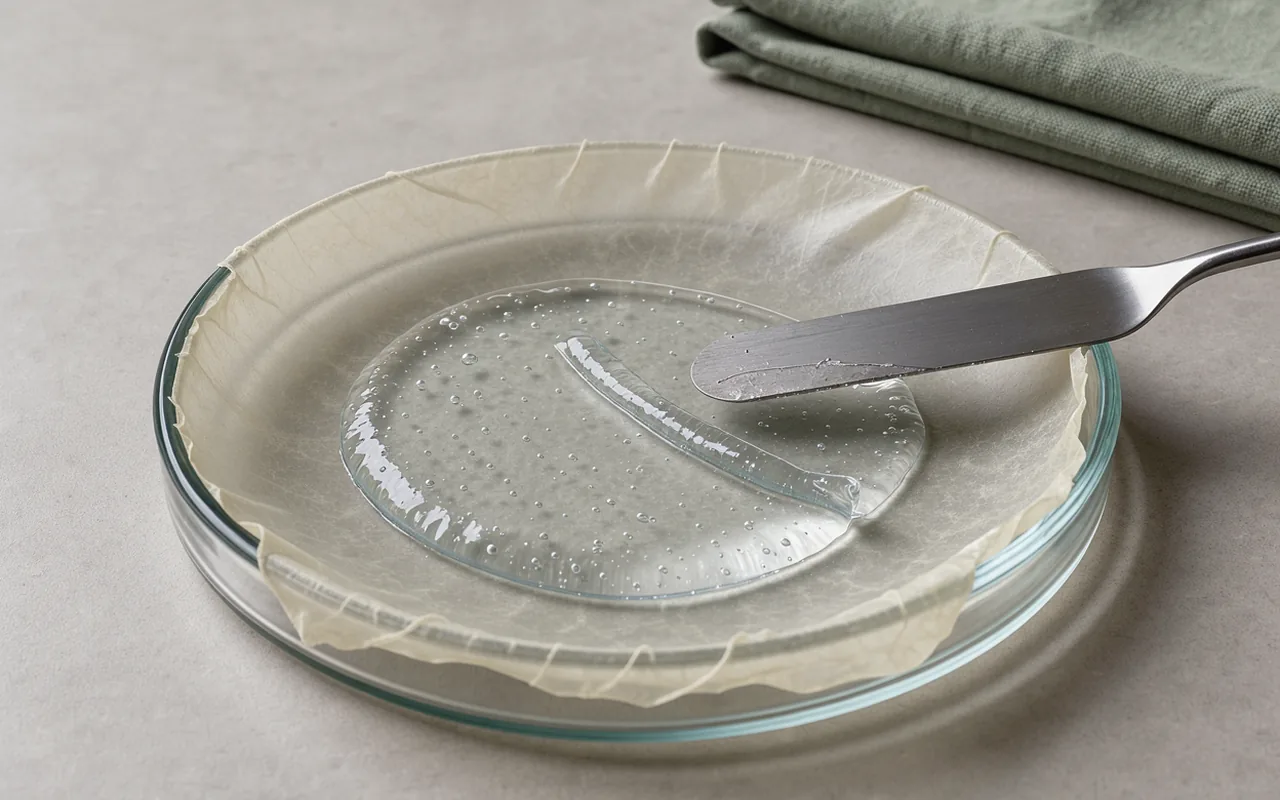
A mucoadhesive KPV hydrogel combined anti-inflammatory, antibacterial and repair effects in laboratory and animal wound models. Mucoadhesive means that the gel clings to moist tissue. Another hydrogel stabilised KPV and controlled its release in formulation work.
The carrier deserves some credit here. The tested preparation includes a way to protect or retain the peptide, and the finding concerns that preparation. I object to removing the gel from the result when the experiment tested the whole preparation.
The newer KPV and rapamycin particle study went in another direction, investigating a combination in cell and animal vascular-calcification models. It shows how varied KPV delivery research has become. It supplies no clinical result for KLOW.
BPC-157 after entering circulation
The rat and dog pharmacokinetic study followed BPC-157 after intravenous and intramuscular administration. Pharmacokinetics is the study of what the body does to a substance. The reported elimination half-life was under roughly 30 minutes in those animals, alongside rapid breakdown into smaller fragments.
Separately, BPC-157 improved healing after complete Achilles tendon transection in rats across biomechanical, functional and microscopic measures. Tendon cells also grew out more in dish experiments. I take those as substantial animal findings; translating them calls for human trials that measure healing and safety.
A 2025 intravenous safety pilot observed two healthy adults given BPC-157, with no observed adverse events or measurable changes in the reported safety biomarkers. Its question and size leave human healing efficacy unresolved.
Whole thymosin beta-4 and the TB-500 fragment
The rat wound experiment by Malinda and colleagues used whole thymosin beta-4. New skin coverage increased by 42% at 4 days and by up to 61% at 7 days compared with saline. Collagen deposition and new blood-vessel formation increased too.
The intravenous trial in healthy volunteers likewise tested thymosin beta-4, the full protein. TB-500 is a short fragment of that protein. Its actin-binding region gives it a biological rationale, but the larger protein has activities that have not been demonstrated for the fragment.
After following those experiments, I cannot treat “TB-500” as shorthand for every thymosin beta-4 finding. Substance, delivery and measured endpoint all have to travel together.
Testing the finished blend
No controlled study in this record compares all four KLOW ingredients together with an individual ingredient, a subset or placebo. The components also differ in how they are cleared. Copper-related compatibility and oxidation remain theoretical formulation questions that have yet to be formally characterised for the mixture.
The 2026 musculoskeletal peptide review describes favourable animal findings alongside scarce rigorous human safety data and potential for serious harm. The experiments that could close those gaps deserve more attention than the expanding claims. The benefits record separates measured outcomes; the safety page considers the unresolved risks.